
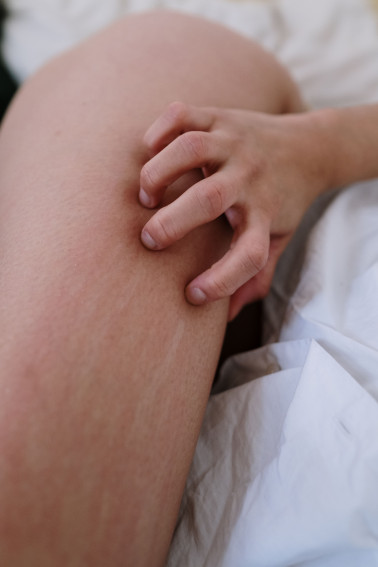
Prurigo nodularis (PN) is a chronic inflammatory skin condition characterised by intensely itchy, hard nodules (bumps) that develop on the skin as a result of repeated scratching or rubbing.
The itch in PN is typically severe – described as one of the most intense forms of chronic itch – and creates a self-perpetuating itch-scratch cycle that drives nodule formation and prevents healing.
Nodules typically appear symmetrically on the limbs and trunk and can number from a few to hundreds. The condition is chronic and often significantly debilitating, with severe itch causing sleep disturbance, anxiety, depression, and a markedly reduced quality of life.
PN was historically difficult to treat, but targeted biologic therapies have significantly changed management outcomes in recent years.
How common is Prurigo Nodularis?
Prurigo nodularis is considered a rare to uncommon condition, though it is likely underdiagnosed and under-recognised. It primarily affects adults and is more common in people over 50. It is more prevalent in people with atopic dermatitis (eczema) or other atopic conditions.
PN is associated with a range of underlying conditions including chronic kidney disease, liver disease, thyroid disease, HIV, and certain haematological conditions – in some patients, PN is the presenting feature of an underlying systemic illness.
People with darker skin tones appear to be disproportionately affected.
Common symptoms include:
-
- Intensely itchy nodules – firm, raised bumps typically 1–3 cm in diameter; can be skin-coloured, pink, red, brown, or hyperpigmented
- Nodules are most common on the outer surfaces of the arms and legs and on the back; the face and palms are usually spared
- Central crusting or excoriation (scratch marks) on nodules from repeated scratching
- Hyperpigmentation (darkening) or hypopigmentation (lightening) of affected areas over time
- Post-inflammatory skin changes and scarring after nodules resolve
- Itch is typically the most prominent symptom – often constant, severe, and worse at night
- Sleep disturbance, fatigue, anxiety, and depression are common
PN is driven by chronic neuroinflammation involving interactions between the immune system and sensory nerves in the skin:
-
- Atopic dermatitis – the most common underlying condition; atopic itch sensitises sensory nerve fibres and promotes the itch-scratch cycle
- Immune dysregulation – type 2 immune inflammation (mediated by IL-4, IL-13, IL-31, and thymic stromal lymphopoietin/TSLP) plays a central role in driving itch and inflammation, as in atopic dermatitis
- Peripheral nerve sensitisation – chronic scratching and inflammation sensitise itch-sensing nerve fibres (C fibres), lowering the itch threshold and perpetuating the cycle
- Systemic conditions – chronic kidney disease, liver disease (including cholestasis), thyroid disease, haematological malignancies, and HIV are all associated with PN through various mechanisms
- Psychological factors – stress, anxiety, and depression do not cause PN but significantly worsen and perpetuate the itch-scratch cycle
PN is a clinical diagnosis made by a dermatologist:
-
- Clinical examination – characteristic nodules on the limbs and trunk with excoriation and hyperpigmentation; distribution and morphology are usually distinctive
- Skin biopsy – may be performed to confirm the diagnosis and exclude other conditions; shows characteristic features of chronic excoriation and epidermal hyperplasia
- Investigation for underlying causes – full blood count, kidney function, liver function, thyroid function, iron studies, and HIV testing are typically performed to identify any contributing systemic illness
- Itch severity scoring – tools such as the Worst Itch Numerical Rating Scale (WI-NRS) are used to grade severity and guide treatment decisions
Treatment aims to break the itch-scratch cycle, reduce inflammation, and promote healing of existing nodules.
Management historically relied on topical corticosteroids, sedating antihistamines, and off-label immunosuppressants with limited efficacy.
Targeted biologics have transformed outcomes for moderate to severe PN.
-
- Topical treatments — Potent or very potent topical corticosteroids applied under occlusion are a standard first-line approach for limited disease. Topical calcineurin inhibitors (tacrolimus, pimecrolimus) are used in some cases.
- Dupilumab (Dupixent) — Dupilumab is an IL-4/IL-13 inhibitor and the first biologic specifically approved for prurigo nodularis. It significantly reduces itch and nodule count and is particularly effective in patients with an atopic background, given the shared inflammatory pathway with atopic dermatitis.
- Nemolizumab — Nemolizumab is an anti-IL-31 receptor antibody that targets a key itch signalling pathway and is an emerging treatment option for PN. Its availability in Australia should be confirmed with a specialist.
- Other systemic treatments — Ciclosporin, methotrexate, oral corticosteroids, and medications targeting the nervous system (gabapentin, pregabalin) have been used with variable results prior to the availability of biologics.
- Phototherapy — Narrowband UVB phototherapy can be effective for widespread PN and is available in specialist dermatology centres.
The following specialty medications are available at Ace, a specialty pharmacy for Prurigo Nodularis.
With Ace, you’ll benefit from:
-
- Expert Support — Our dedicated team of health concierges is always available to answer your questions, provide guidance, and help you navigate your condition with confidence.
- Specialty Medication — We offer a wide range of specialty medications and support services, designed specifically for those living with chronic illnesses. Whether you’re looking for help managing a specific condition, or simply need access to the medications you need, we’ve got you covered.
- A Wide Range of Conditions — From diabetes to heart disease, and everything in between, we help manage a variety of special condition
Take control of your health and well-being, and start your journey to better health with Ace today.
Prurigo Nodularis & Skin Condition Support
-
- Australasian College of Dermatologists – Find a Dermatologist
- Eczema Association Australasia – support for people with atopic and chronic skin conditions
- DermNet – Prurigo Nodularis – comprehensive clinical dermatology resource
Clinical Resources