

One 30-mg tablet of VOCABRIA (cabotegravir) and one 25-mg tablet of EDURANT (rilpivirine)
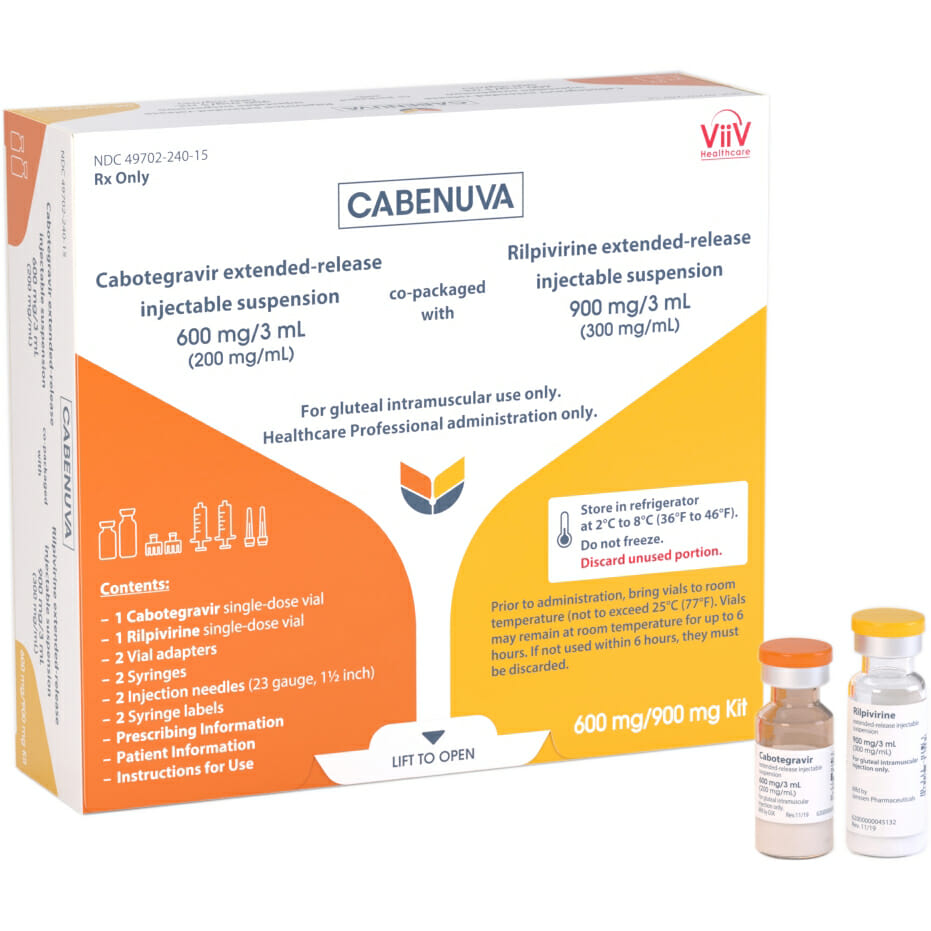
CABENUVA is used to treat Human Immunodeficiency Virus (HIV) infection in adults aged 18 years and over. CABENUVA contains two medicines, cabotegravir prolonged-release suspension for injection and rilpivirine prolonged-release suspension for injection, packaged together. Cabotegravir belongs to a group of anti-retroviral medicines called integrase inhibitors (INIs) and rilpivirine belongs to a group of antiretroviral medicines called non-nucleoside reverse transcriptase inhibitors (NNRTIs). CABENUVA does not cure HIV infection; it keeps the amount of virus in your body at a low level. This helps maintain the number of CD4+ cells in your blood. CD4+ cells are a type of white blood cells that are important in helping your body to fight infection. CABENUVA will replace your current antiretroviral treatment. To control your HIV infection, you must attend your planned appointments to receive CABENUVA, unless your doctor tells you to stop. If you stop CABENUVA, it is important to see your doctor who will give you other antiretroviral medicines to treat your HIV infection.
Back To TopHow much is given
When you first start treatment with CABENUVA, your doctor will advise you to take VOCABRIA (cabotegravir) tablets (30 mg) and rilpivirine tablets (25 mg), once a day, for one month (lead-in period) before your first CABENUVA injections. Taking VOCABRIA tablets and rilpivirine tablets before you receive CABENUVA injections will allow your doctor to test how well you tolerate these medicines. In the second month (following 1 month oral treatment) you will receive CABENUVA 3 mL injections (cabotegravir 600 mg in 3 mL injection and rilpivirine 900 mg in 3 mL injection) at the same visit. Following this, you will be given CABENUVA as two injections, either once every month or once every 2 months. Your doctor will advise you of your dosing schedule.
How it is given
You will be given CABENUVA as two injections, once every month or once every two months. A nurse or doctor will give you the injections in the muscle of each side of your buttocks (intramuscular injection [IM]).
How long it should be given
Continue receiving your medicine for as long as your doctor tells you. CABENUVA injections are prolonged-release medications, so if you stop treatment, the injections will remain in your system for up to a year or more after your last injection. It is important that you attend your planned appointments to receive your CABENUVA injections.
Back To TopTake CABENUVA for as long as your doctor recommends. Don't stop unless your doctor advises you to. If you miss an appointment to receive your injections, contact your doctor right away to make a new appointment. Talk to your doctor if you think you will not be able to receive your CABENUVA injections at the usual time. Your doctor may recommend you take VOCABRIA and rilpivirine tablets instead until you are able to receive your CABENUVA injections again. Talk to your doctor if you are thinking about stopping treatment. You will need to take other medicines to treat your HIV infection and prevent the development of viral resistance if you are late receiving or stop receiving CABENUVA injections. These medicines help to control your condition but do not cure it. It is important to keep receiving your medicines even if you feel well.
Back To TopA doctor or nurse will give these injections to you, so it is unlikely that you will be given too much. If you are worried, talk to the doctor or nurse.
Back To TopKeep your injections in the pack until it is time to take them. Store your injections in a refrigerator at 2°C to 8°C. Do not freeze them. Keep them where children cannot reach.
Back To TopThese medicines help most people with HIV, but they may have unwanted side effects in a few people. All medicines can have side effects. Sometimes they are serious; most of the time, they are not. You may need medical attention if you get some of the side effects. When you are being treated for HIV, it can be hard to tell whether a symptom is a side effect of the CABENUVA injections or other medicines you are taking, or an effect of the HIV disease itself. It is very important to talk to your doctor about any changes in your health. Some side effects may only be seen in your blood tests and may not appear immediately after you start receiving CABENUVA injections. If you get any of these effects, and if they are severe, your doctor may advise you to stop CABENUVA injections. As well as the effects listed below for CABENUVA injections, other conditions can develop during combination therapy for HIV. Do not be alarmed by the following lists of side effects. You may not experience any of them. Ask your doctor or pharmacist to answer any questions you may have. Tell your doctor or pharmacist if you notice any of the following and they worry you:
Very common side effects
These may affect more than 1 in 10 people:
- headache
- injection site reactions: In clinical studies, these were generally mild to moderate and became less frequent over time. Symptoms may include:
- Very common: pain and discomfort, a hardened mass or lump
- Common: redness, itching, swelling, bruising, warmth or discoloration.
- Uncommon: numbness, minor bleeding, an abscess (collection of pus) or cellulitis (warmth, swelling or redness).
- feeling hot (pyrexia)
Common side effects
These may affect up to 1 in 10 people:
- depression
- anxiety
- abnormal dreams
- difficulty sleeping (insomnia)
- dizziness
- feeling sick (nausea)
- vomiting
- stomach pain (abdominal pain)
- wind (flatulence)
- diarrhea
- rash
- muscle pain (myalgia)
- lack of energy (fatigue)
- feeling weak (asthenia)
- generally feeling unwell (malaise)
- weight gain
Uncommon side effects
These may affect up to 1 in 100 people:
- feeling drowsy (somnolence)
- liver damage
- changes in liver blood tests
Other side effects that may show up in blood tests
Other side effects have occurred in some people, but their exact frequency is unknown:
- increase in bilirubin (a substance produced by the liver) in the blood
- an increase in the level of enzymes produced in the muscles (creatine phosphokinase, creatinine)
Cabenuva (cabotegravir and rilpivirine) can interact with various medications, potentially affecting its efficacy. Key interactions include rifamycins (e.g., rifampin, rifabutin), anticonvulsants (e.g., carbamazepine, phenytoin), St. John's Wort, proton pump inhibitors (e.g., omeprazole), and glucocorticoids (e.g., dexamethasone). Additionally, it may interact with other antiretrovirals and QT-prolonging drugs, increasing the risk of adverse effects. Always inform your healthcare provider about all medications, supplements, and herbal products you are taking to avoid potential interactions and manage your treatment effectively.
Back To TopHow is Cabenuva administered?
Cabenuva is administered as an intramuscular injection, either once a month or every two months, by a healthcare professional.
Can I switch to Cabenuva from my current HIV treatment?
If you are virologically suppressed and meet the eligibility criteria, you may be able to switch to Cabenuva. Consult your healthcare provider to discuss if this option is suitable for you.
Who can use Cabenuva?
Cabenuva is intended for adults with HIV-1 who are virologically suppressed (HIV-1 RNA less than 50 copies per mL) on a stable antiretroviral regimen, with no history of treatment failure and no known or suspected resistance to cabotegravir or rilpivirine.
Back To TopAce provides accurate and independent information medically reviewed on prescription medications. This material is provided for educational purposes only and is not intended for medical advice, diagnosis or treatment.
Back To Top